
Program Overview
Welcome to the Young Aviators Program
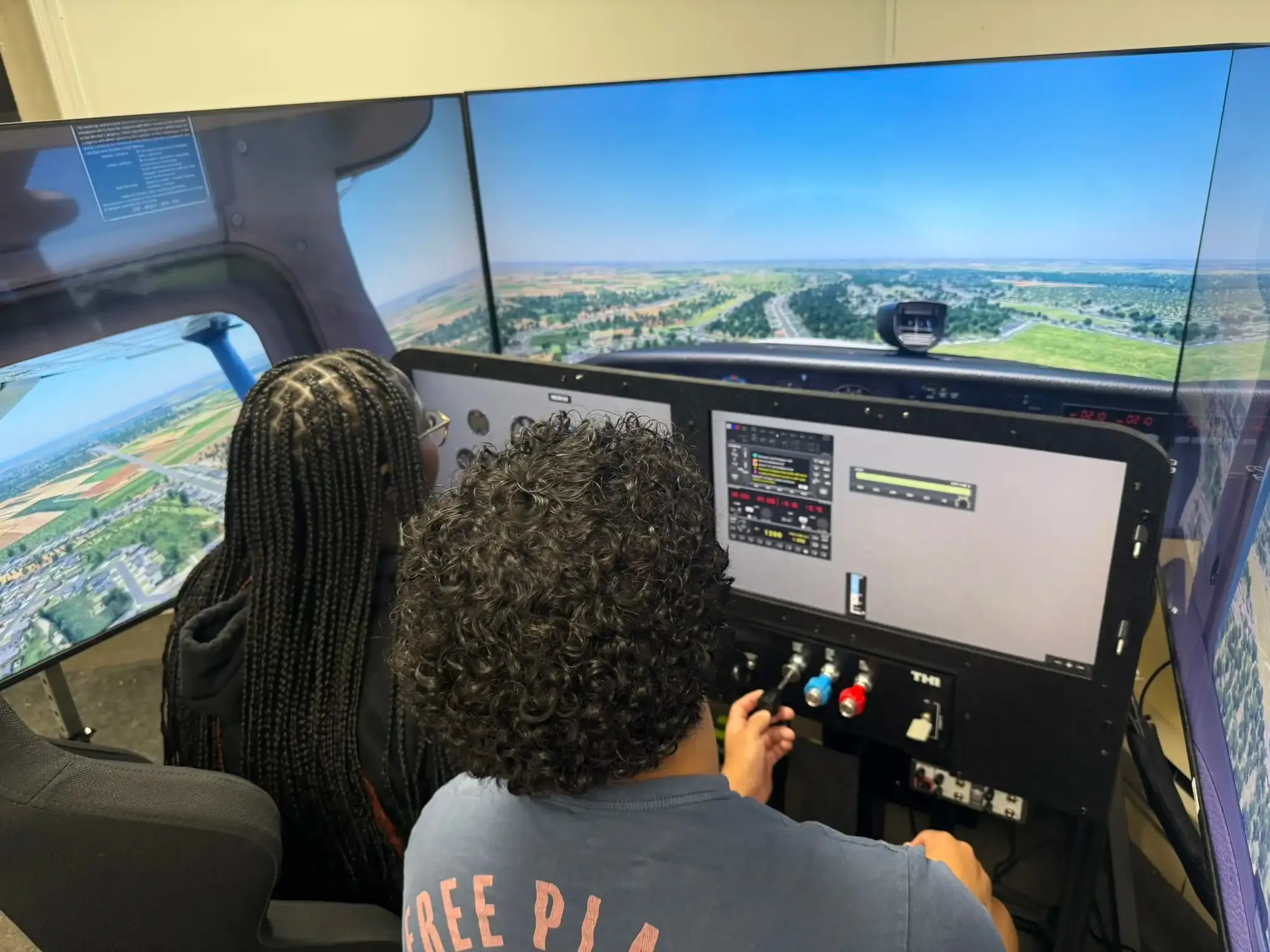
Our 16-session curriculum is structured to take young enthusiasts from their first cockpit orientation to planning and flying an autonomous cross-country flight.
16 Guided Sessions
1.5 hours each, conducted 1-on-1 with a professional flight instructor.
Flexible Scheduling
Choose a once-per-month or twice-per-month cadence, whatever fits your family.
Real Aircraft Discovery Flight
Step into an actual aircraft after Lesson 8 once your student is ready.
Cross-Country Capstone
By Lesson 16, students plan, navigate, and pilot their own simulated cross-country mission.

Phase 1: Foundations (Lessons 1–4)
Comfort with the Airplane & Cockpit Controls
Goal: comfort with the airplane, the sim environment, and basic control.
Lesson 2, Turns and Coordination
- ● Shallow and medium turns; rudder use / coordination (ball centered)
- ● Climbs and descents at constant airspeed
- ● Combine: climbing turns, descending turns
Lesson 3, Slow Flight Introduction
- ● Effects of configuration (flaps) on control
- ● Slow flight (guided, high instructor involvement)
- ● Intro to stalls conceptually, recognition, not full recovery yet
Lesson 4, Traffic Pattern Basics
- ● Rectangular pattern concept, standard pattern altitude/legs
- ● Radio calls (non-towered pattern calls)
- ● Intro approach and landing sight picture (instructor-assisted)

Phase 2: Core Maneuvers (Lessons 5–8)
Core Maneuvers & Discovery Flight Prep
Goal: build the maneuver set that supports the discovery flight.
Lesson 6, Stalls and Slow Flight
- ● Power-off and power-on stall recognition and recovery
- ● Slow flight maneuvering
Lesson 7, Ground Reference & Emergency Basics
- ● Turns around a point / S-turns (intro level)
- ● Simulated engine-out, best glide, field selection concept
- ● Emergency checklist familiarization
Lesson 8, Pattern Proficiency & Discovery Flight Prep
- ● Full pattern work: takeoff, crosswind, downwind, base, final, landing
- ● Crosswind landing concept (as sim allows)
- ● Mock "discovery flight" briefing, what to expect in the real airplane

Phase 3: Navigation & Systems (Lessons 9–12)
Navigation Building Blocks & Avionics
Goal: introduce cross-country building blocks.
Lesson 10, Navigation Fundamentals
- ● Sectional chart reading basics
- ● Pilotage concepts, landmarks, checkpoints
- ● Intro to VOR/GPS navigation display
Lesson 11, GPS & Flight Planning
- ● Using GPS for direct-to and flight plan entry
- ● Basic flight planning: route, checkpoints, fuel planning concept
- ● Weather briefing basics
Lesson 12, Radio & Airspace
- ● Airspace classes overview
- ● Radio communication procedures, towered vs. non-towered
- ● Simulated ATC interaction (instructor plays ATC)

Phase 4: Cross-Country Capstone (Lessons 13–16)
Cross-Country Capstone
Goal: put it all together, the payoff lesson.
Lesson 14, Cross-Country Flight, Leg 1
- ● Fly the planned route, first leg(s)
- ● Navigation, radio calls, airspace transitions
- ● Handle a simulated minor deviation (weather/traffic)
Lesson 15, Cross-Country Flight, Leg 2 + Diversion
- ● Continue/complete the route
- ● Simulated diversion exercise (unplanned reroute, new GPS destination)
- ● Emergency review woven in (engine trouble en route)
Lesson 16, Capstone Cross-Country
- ● Full route flown start to finish with minimal instructor intervention
- ● Student handles planning recap, radio calls, navigation, and landing independently
- ● Debrief: readiness assessment, certificate of completion, next steps toward age 15½/16 flight training track
Continuing After Lesson 16
Keep Building Skills Until Age 16
Many students aren't quite old enough for the airplane by the time they finish the program, that's perfectly normal. We offer additional 4-lesson blocks to keep building skills:
Instrument Awareness Block
Basic instrument flying, attitude control, and partial panel techniques.
Learn more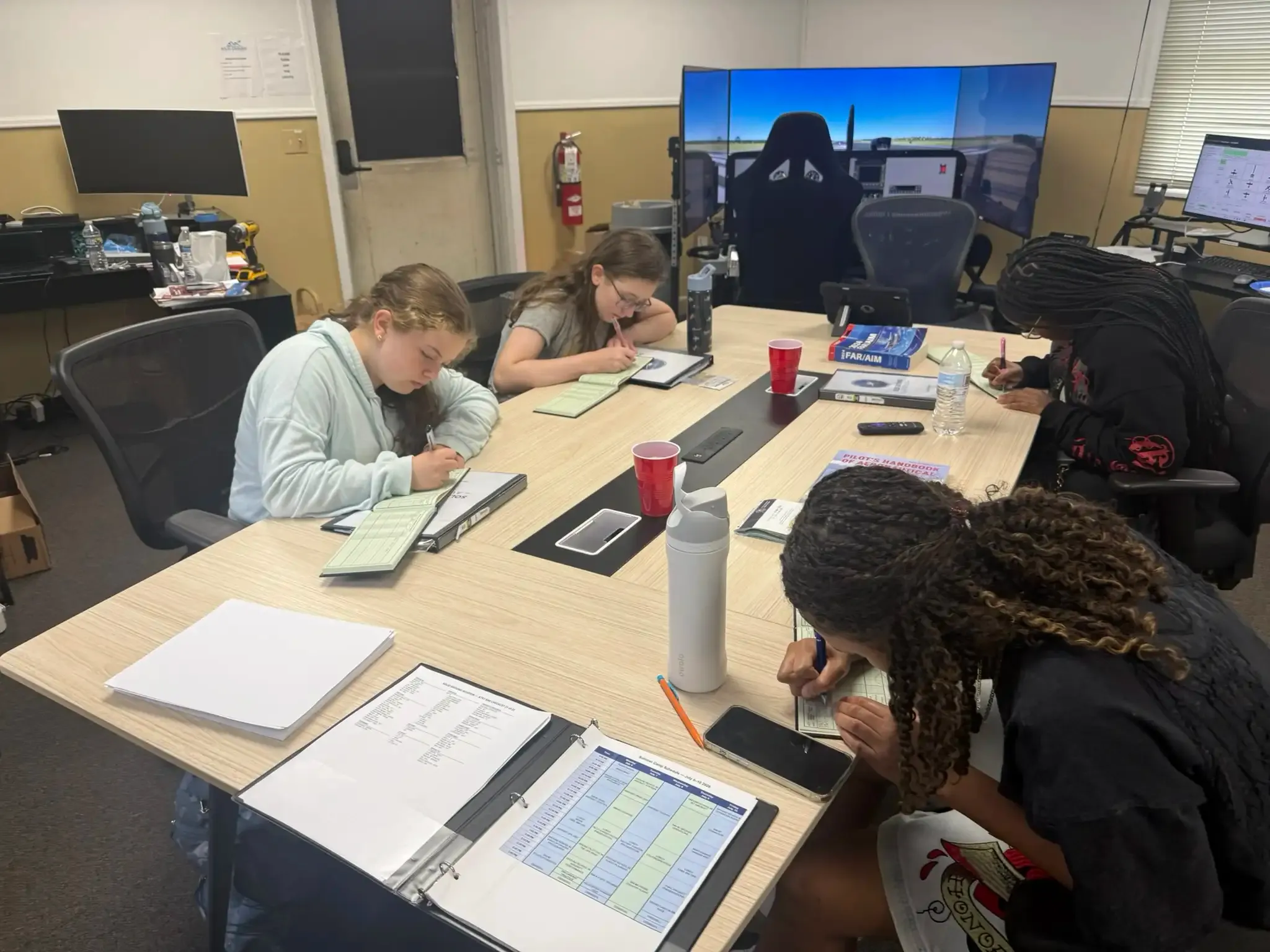
Advanced Navigation Block
Longer cross-countries, night simulation, and diversions under pressure.
Learn more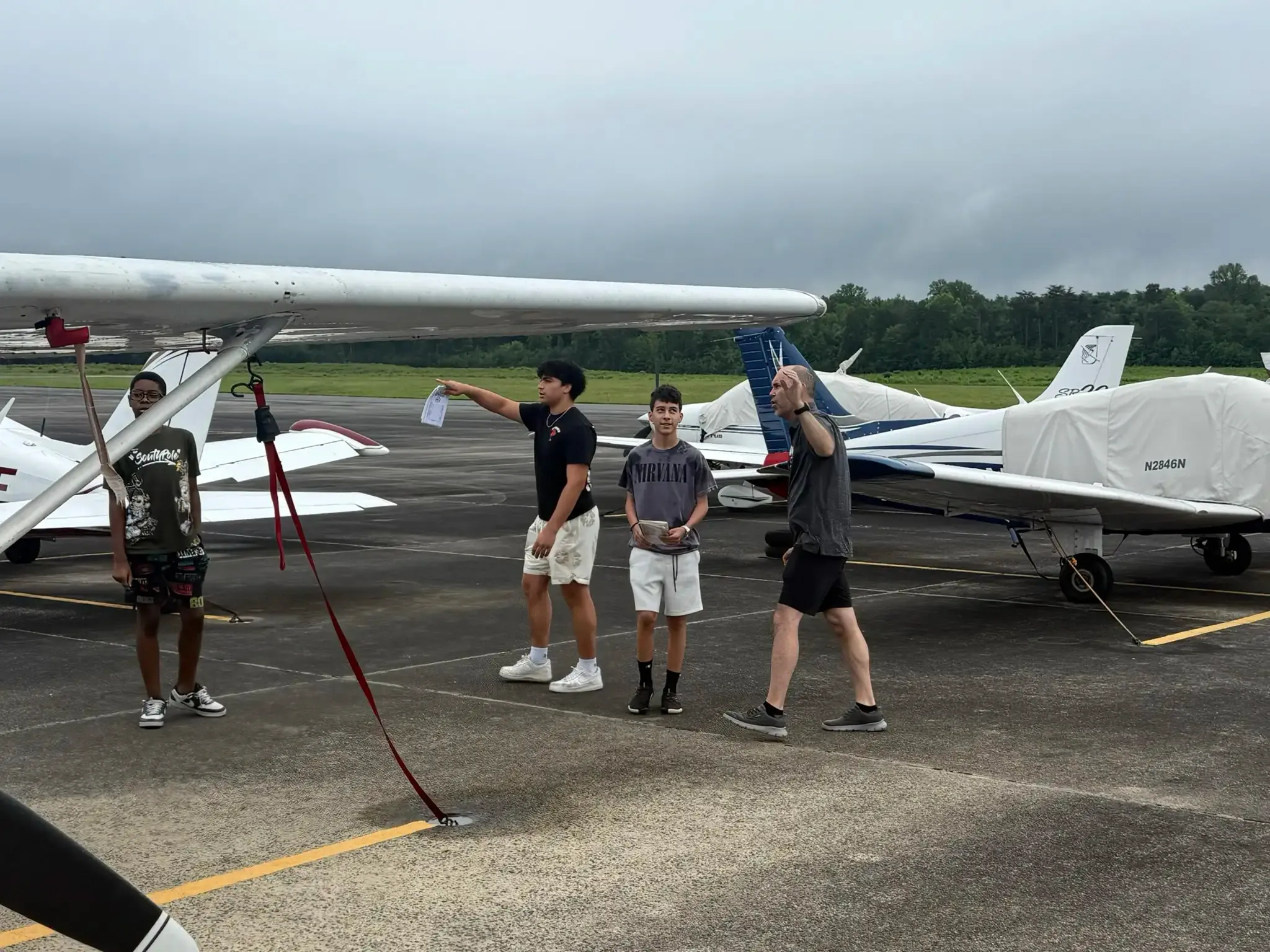
Emergency Procedures Block
Deeper systems failures, engine-out scenarios, and off-airport landings.
Learn more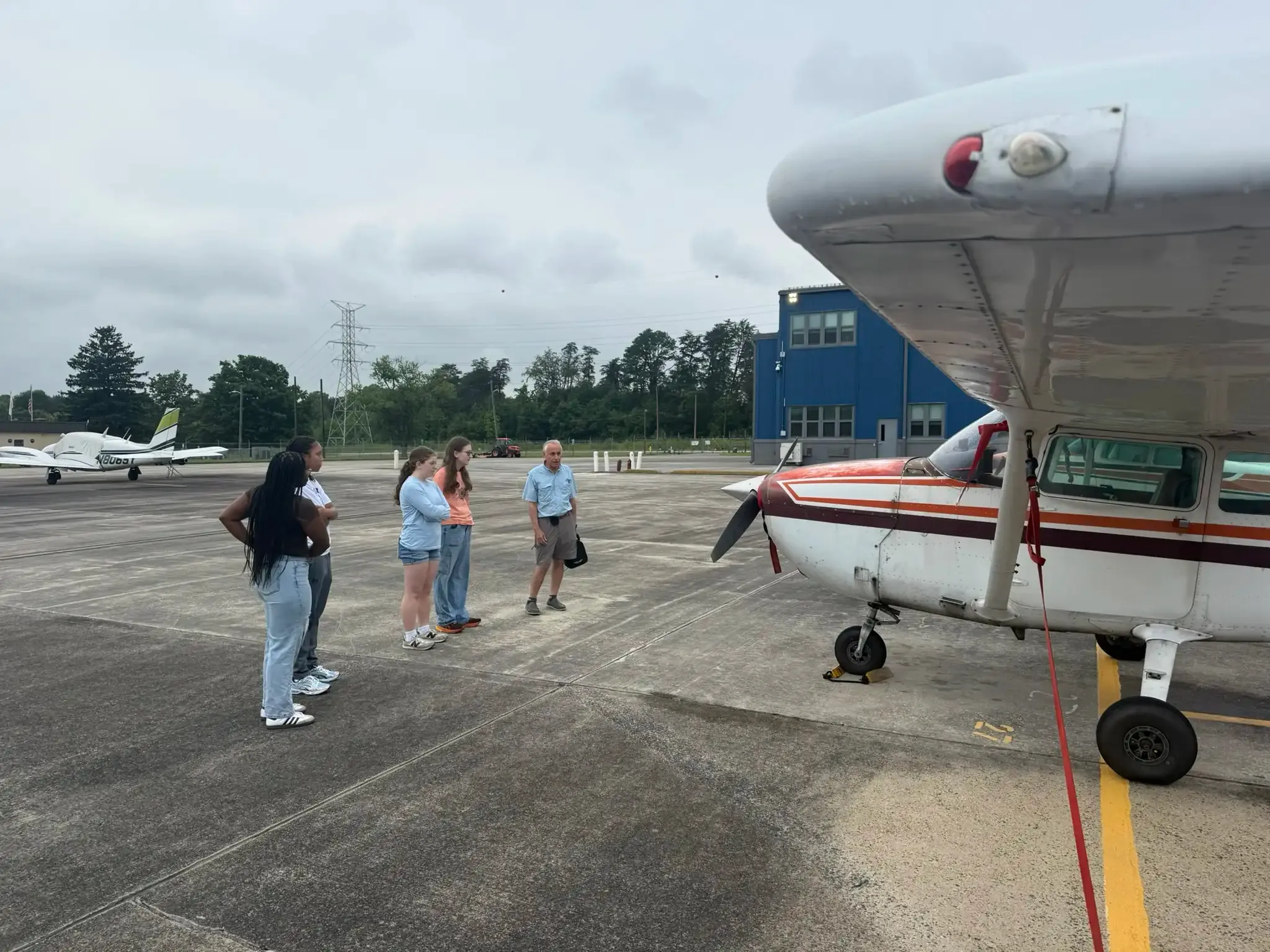
Checkride Prep Preview
A fun first look at the kind of questions asked on the private pilot oral exam.
Learn morePricing & Enrollment
Transparent flight training tuition. Frequency options: once per month or twice per month, selected at enrollment.
| Option | Price | Notes |
|---|---|---|
| Per-session (à la carte) | $155 / session | 1.5 hrs, includes simulator rental & instructor time |
| Full 16-lesson package | $2,200 total | Saves $280 vs. à la carte ($2,480) |
| Convert to package | $2,200 (full discount honored) | Must convert by the start of Lesson 3 |
* Frequency options: once per month or twice per month, selected at enrollment.
Enroll Now
Questions? We're Here to Help.
We're happy to walk through the program, scheduling, or pricing in more detail. We're looking forward to helping your student build a real foundation in aviation.
Enroll Now
Fill out the form below and let's start learning! We will get in touch with you and walk you through the next steps on getting started.
Young Aviators Program
Fort Meade, MD (KFME) • (410) 705-2250

New to Flight Training?
Download Our Free Guide
Confused by FAA requirements? Want to master the basics before investing? Our free roadmap simplifies the flight training process, answers the most common student pilot questions, and shows you exactly how starting in a simulator can save you over $3,000 on your license.